AC Repair in Lakeland, FL
AC repair in Lakeland for warm air, a unit that won't start, iced lines or water by the indoor unit, with a written price before the fix.
AC repair in Lakeland is mostly a matter of running time. An air conditioner in Polk County runs from March into November, often for most of the day in July and August, and that many hours wears out the same handful of parts again and again. Most calls end with one of them replaced and the house cooling again the same visit, so the first job is finding which part it is.
What usually fails
After years of service calls across Lakeland, Winter Haven and Plant City, the same causes come up most often:
- Capacitors. The capacitor gives the compressor and the outdoor fan the jolt they need to start. Heat wears it out, and a swollen or weak one is the single most common reason a unit hums but won’t run.
- Contactors. This switch in the outdoor unit closes when the thermostat calls for cooling. Its contacts pit and burn over time, and ants are known to nest in them in Florida.
- Clogged condensate drain lines. Algae grows in the drain line and blocks it. The water backs up into the pan, and the safety switch shuts the system off, or the water spills onto the closet or garage floor.
- Dirty coils. Dust, pollen and grass clippings coat the outdoor coil, and a dirty filter coats the indoor one. Either way the system runs longer and cools less.
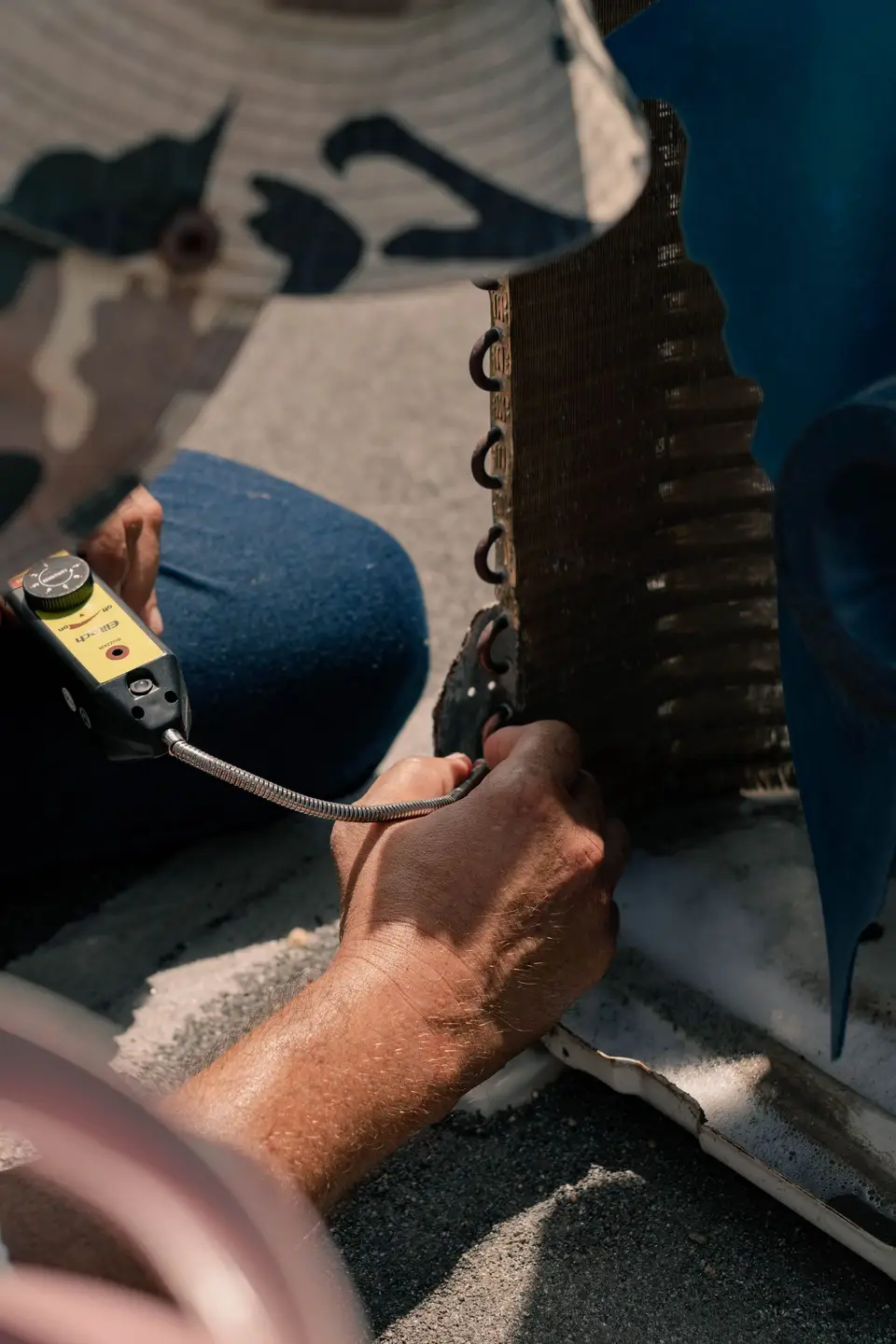
- Refrigerant leaks. Low refrigerant always means a leak somewhere. Topping it up without finding the leak just means another call next summer.
- Fan motors. An outdoor fan that won’t spin or an indoor blower that hums and stops leaves the system running with no air moving.
How a repair visit goes
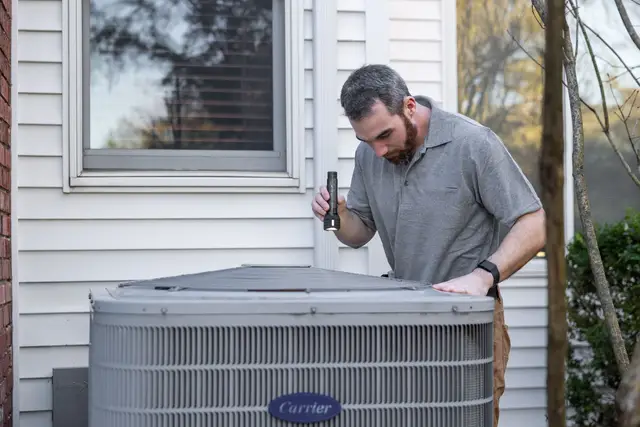
The tech starts at the thermostat and works out to the outdoor unit, because the symptom you noticed is not always where the problem is. Warm air from the vents can be a failed capacitor outside, a frozen coil inside or a thermostat that never sends the call. The tech measures the electrical parts, checks the refrigerant pressures and temperatures, looks at the drain line and the coils, and tells you what failed in plain words.
You get the price of the repair in writing before any work starts. Most common parts ride on the van, so a capacitor, contactor, drain line clearing or thermostat swap is usually done the same visit once you approve it. A part that has to be ordered, like a specific fan motor or a compressor, comes with a time estimate before you decide.
Checks we run after the fix
A repair is only finished when the system proves it. After the fix the tech runs a full cooling cycle, measures the temperature of the air at the supply vents against the air going back in, checks that the drain line is carrying water away and makes sure the outdoor fan and compressor start and stop cleanly. If something else looked close to failing, you hear about it with a price, and the choice to fix it now or later stays yours.
When we will tell you not to repair
Not every air conditioner is worth fixing. If the compressor has failed on an older system, if the system still runs on R-22, or if this is the third or fourth repair in two seasons, a repair can cost real money and still leave you calling again next summer. In those cases you get both prices, the repair and a new system, on the same page with our honest view. Our system replacement page explains how we size and quote a new one.
A few things to try before you call
Some no-cool calls have simple causes you can check yourself. Make sure the thermostat is set to cool and a few degrees below the room temperature, and that its batteries are fresh. Check the breaker for the outdoor unit and the switch near the indoor unit. Look at the filter, and if you cannot see light through it, change it. If the lines or the coil have ice on them, turn the system off and let it thaw for a few hours before you run it again.
If none of that helps, or if the outdoor unit buzzes with the fan still, turn the system off and book a service call. Running a unit with a failed capacitor can burn out the motor or the compressor, which turns a small repair into a large one.
Keeping a repaired system running
The best repair is the one you never need. A spring tune-up cleans the coils, clears the drain line and tests the capacitor before the long summer starts. If the system quits on a weekend or at night, our emergency repair service covers it with the after-hours rate told to you first.
We repair air conditioners throughout Lakeland, Winter Haven and Plant City. For help deciding between a fix and a new system, read our guide to repairing or replacing your AC.
Where we work
- AC repair in Lakeland, FLFrom the older bungalows around Lake Morton to the newer subdivisions off the Polk Parkway, we repair, tune up and replace heating and cooling systems across the city.
- AC repair in Winter Haven, FLLakefront homes and long humid summers around the Chain of Lakes keep air conditioners running hard, so we check the drain line and the coils on every visit.
- AC repair in Plant City, FLRanch homes, older duct runs in hot attics and summer storms that knock the power out and strain the compressor when it comes back on.
Guides
- AC Maintenance for a Florida Summer: A Homeowner's ChecklistAC maintenance for a Florida summer. Filters, drain lines, the outdoor unit, thermostat settings and the warning signs to catch before a July breakdown.
- What an AC Service Call Costs in Lakeland, and WhyWhat an AC service call costs in Lakeland and what goes into it. Diagnostic fees, after-hours rates, parts, written quotes and what to ask before booking.
- Repair or Replace Your AC in Lakeland? How to DecideRepair or replace your AC in Lakeland? How age, repair cost, refrigerant type, efficiency and the Florida climate decide whether a fix or a new system makes sense.
- Choosing an HVAC Company in Lakeland: What to AskChoosing an HVAC company in Lakeland? Check the license, ask how the price is set, and see what a good quote and a good install look like before you sign.
Questions about ac repair
Can you come out the same day when the AC stops?
Often, yes, especially early in the day. A house with no cooling in July goes to the front of the list. You hear the time and the service call price on the phone, and if a weekend or evening rate applies, you hear that before you book.
Is it worth repairing an older air conditioner?
Often it is. A capacitor or a clogged drain line is a small bill even on an older system. When the repair is a large part of what a new system costs, or the compressor itself has failed on a unit past 12 or 15 years, we give you both prices and say plainly which way we would lean.
My system uses R-22. Can you still recharge it?
New R-22 has not been made in the United States since 2020, so only recovered and recycled supply is left, and it is expensive. If an R-22 system is low, it has a leak. We can find and price the leak repair, but on most of these systems replacement is the better spend, and we show you both.
Why does my AC freeze up?
Ice on the lines or the indoor coil usually means the coil is not getting enough warm air across it, from a clogged filter, a dirty coil or a weak blower, or that the system is low on refrigerant. Turn the system off and let it thaw, then book a call. Running it frozen can damage the compressor.