What an AC Service Call Costs in Lakeland, and Why

What an AC service call costs in Lakeland depends on a few clear things: when the visit happens, what the tech finds and what it takes to fix it. The exact figures vary from company to company, so this guide does not quote any. Instead it explains what goes into the price, what to ask before you book, and how to read the quote you get, so you can judge any offer for yourself.
The two parts of almost every bill
Most heating and cooling bills have two parts. The first is the service call, sometimes called a trip charge or diagnostic fee. It covers the drive to your home, the time to test the system and the tech’s skill in finding the cause. The second is the repair itself: the part, if one is needed, and the labor to fit it.
Some companies roll the two together, and some credit the service call toward the repair if you go ahead. Neither approach is wrong. What matters is that you know which one applies before the tech arrives.
What the service call should include
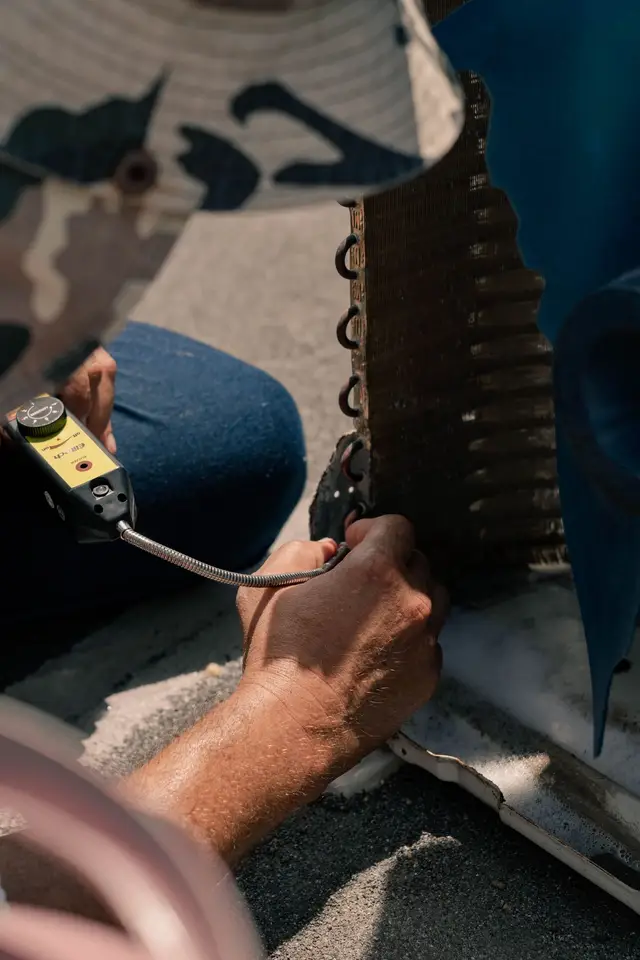
A proper service call is more than a look at the outdoor unit. The tech should check the thermostat, the indoor unit and the outdoor unit, measure the electrical parts like the capacitor and contactor, check the refrigerant pressures and temperatures, look at the filter and the drain line, and tell you what failed in plain words. You should be able to see the part or the reading that shows the problem.
If the visit ends with a price but no clear explanation of what failed, ask. A good tech is glad to show you.
Daytime, evening and weekend rates
Almost every company charges more for visits outside normal hours, on weekends and on holidays. That is fair, since it means keeping techs on call. What is not fair is finding out at the door. Ask for the after-hours rate on the phone, before you book.
Ask also whether the problem can wait. On a mild night with fans running, a failed air conditioner can often wait until the morning, and the weekday rate saves money. On a 95-degree afternoon with someone vulnerable in the house, it usually cannot.
Common repairs and what drives their cost
Repairs fall into rough groups. The details vary, but the groups help you know what to expect.
- Small parts. Capacitors, contactors, fuses and relays. These are common, quick to replace and usually on the van. The bill is mostly the service call and a short labor charge.
- Drain line and coil cleaning. Clearing a clogged condensate drain or cleaning a coil. Mostly labor, and often done the same visit.
- Motors and controls. Outdoor fan motors, blower motors and control boards cost more as parts, and some have to be ordered.
- Refrigerant work. Finding and fixing a leak and recharging the system. The cost depends on where the leak is and the type of refrigerant. Older R-22 systems cost much more to recharge because the refrigerant is no longer made.
- Major components. Compressors and coils. These are the repairs where replacing the system becomes a fair question.
Why a written quote matters
Whatever the repair, the price should be in writing before any work starts. A written quote should name the part or the work, the price of the part and the labor, and any warranty on the repair. If replacement is an option, both prices should be on the same page.
A written quote protects you in two ways. It means the final bill matches what you agreed to, and it lets you compare one company against another if you want a second opinion on a large repair.
Watch for these warning signs
Most heating and cooling companies are honest, but a few practices are worth watching for. Be cautious of a very low advertised service call that turns into a high-pressure sale at the door. Be cautious of a recommendation to replace the whole system without a repair price beside it. Be cautious of a refrigerant top-up with no attempt to find the leak, since a system that is low on refrigerant has a leak somewhere and will be low again.
Check the company’s license too. Florida licenses heating and cooling contractors through the Department of Business and Professional Regulation, and you can look up any license by name or number on the state site before you book.
How a maintenance plan changes the math
Many companies offer a maintenance plan with two tune-ups a year and priority scheduling. The value is less about the discount and more about the breakdowns it prevents. A weak capacitor replaced in April is a small, planned bill. The same capacitor failing in July means an urgent call, possibly at the after-hours rate, and a hot house while you wait.
Questions to ask when you book
- What is the service call price, and is it credited toward the repair?
- Is there a different rate for evenings, weekends or holidays?
- Will I get the repair price in writing before any work starts?
- If replacement comes up, will I see the repair price too?
- Is the company licensed, and what is the license number?
Next steps
If your system is acting up, book a service call and ask these questions on the phone. Our AC repair page explains what a repair visit covers, and our emergency repair page explains how after-hours visits work. We work throughout Lakeland, Winter Haven and Plant City.
Questions about this guide
Why do companies charge just to come out?
A service call covers the drive, the time on site and the diagnostic work, which takes training and equipment. Some companies advertise a very low or free visit and make it back on the repair. A clear service call price, told to you up front, is easier to compare.
Is the service call credited to the repair?
Some companies credit part or all of it if you go ahead with the repair they quote, and some do not. Ask when you book, so you know before anyone comes out.
Should I get a second opinion on an expensive repair?
For a large repair, such as a compressor or a coil, or for a recommendation to replace the whole system, a second opinion is reasonable. A written, itemized quote from the first visit makes the comparison much easier.