AC Maintenance for a Florida Summer: A Homeowner's Checklist
AC maintenance for a Florida summer starts long before the first hot week. An air conditioner in Central Florida runs from spring into late fall, often for most of the day from June through September. The parts that wear out give warning signs well before they fail, and a homeowner who knows what to look for can catch many of them. This checklist covers what you can do yourself, what to leave to a tech, and the signs that mean it is time to call.
Change the filter more often than the package says
The filter is the simplest and most important piece of maintenance. A clogged filter starves the system of air, which makes it run longer, cool less and in the worst case freeze the indoor coil solid. Many one-inch filters say they last three months, but in a Florida summer with the system running all day, that is often too long.
Check the filter every month from May through September. Hold it up to the light. If you cannot see light through it, change it. Homes with pets, a dusty road nearby or recent construction may need a new filter every month. Write the date on the edge of each new filter so you know when it went in.
Keep the condensate drain line clear
Your air conditioner pulls a surprising amount of water out of the air on a humid day, and that water leaves through the condensate drain line. In Florida, algae grows in that line, and a clogged drain is one of the most common summer service calls. When it clogs, water backs up into the pan, and the safety switch shuts the system off, or the water spills onto the closet floor, the garage or a ceiling.
Find where the drain line leaves the house, usually a small white PVC pipe near the outdoor unit. On a hot day it should drip steadily. If it stops, the line may be clogging. Every few months, pour a cup of white vinegar into the access point near the indoor unit to slow the algae. If water is already backing up, turn the system off and book a service call.
Give the outdoor unit room to breathe
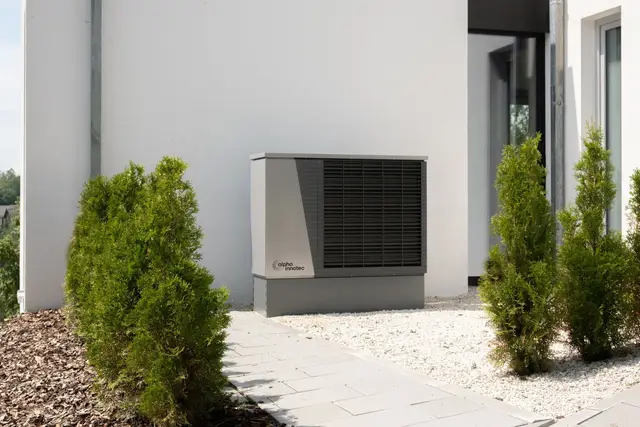
The outdoor unit pushes the heat from your house into the air outside. To do that it needs airflow. Keep shrubs trimmed back at least two feet on every side and keep the top clear. Do not stack anything against it, and point the lawn mower so grass clippings blow away from it rather than into the coil.
Once or twice a season, with the power off at the disconnect, rinse the coil gently with a garden hose to wash off dust and pollen. Never use a pressure washer. If the thin metal fins are badly bent or the coil is caked with dirt, leave the cleaning to a tech.
Set the thermostat sensibly
Most people are comfortable between 76 and 78 degrees while they are home in summer. Each degree lower adds to the running time and the bill. When you are away for the day, setting the thermostat a few degrees higher saves money without making the system work harder overall. A programmable or smart thermostat can handle this for you.
Keep the fan set to auto rather than on. With the fan running all the time, the water that collects on the indoor coil can blow back into the house, which makes it feel more humid.
Keep vents and returns clear
Walk through the house once a season and make sure furniture, curtains and rugs are not blocking the supply vents or the return grille. Closing vents in unused rooms rarely saves money, because it raises the pressure in the ducts and can push cool air out through leaks into the attic.
Book a spring tune-up
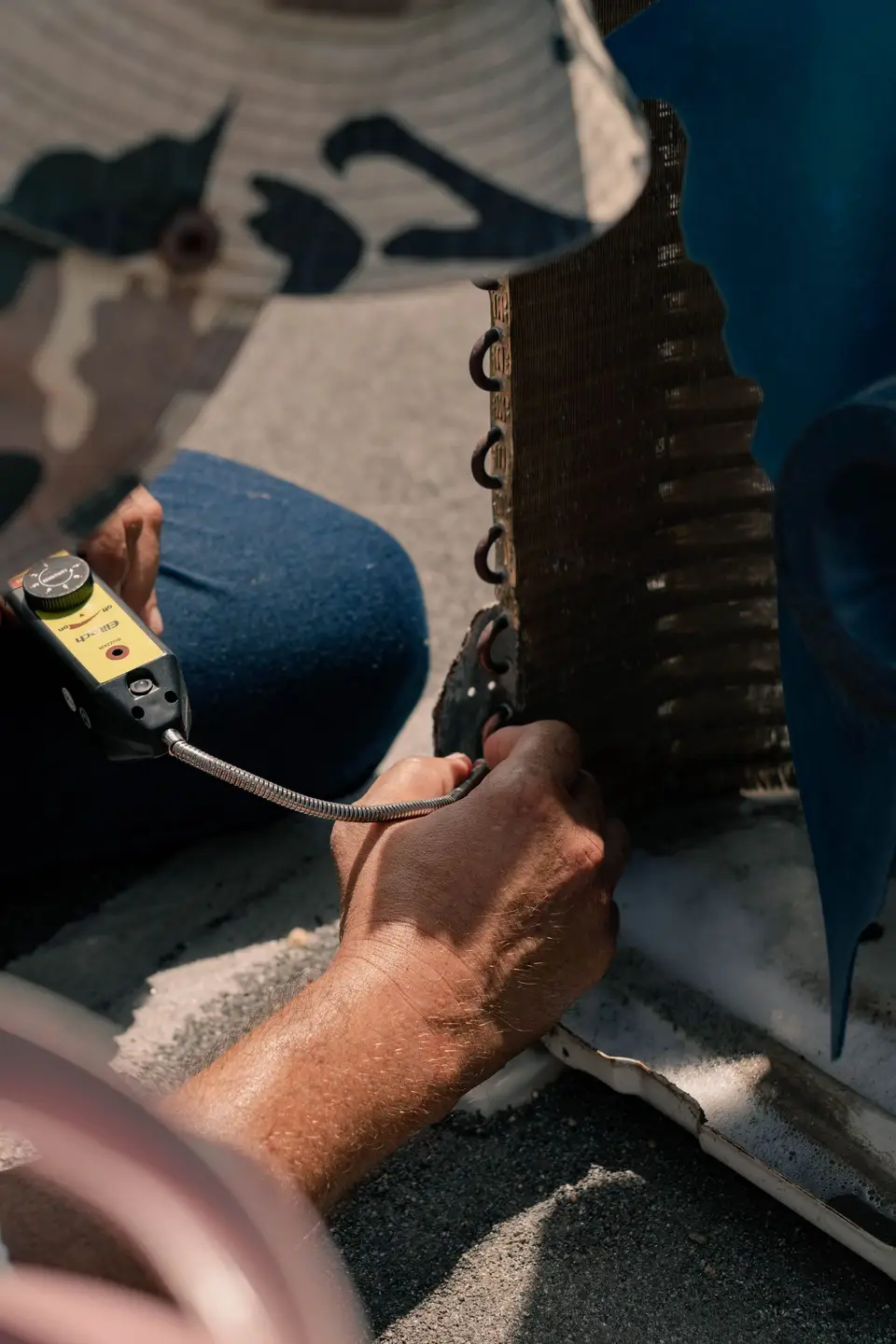
Some of the most important checks need a tech with the right tools. A spring tune-up tests the capacitor and contactor, the parts that most often fail on a hot afternoon. It measures the refrigerant pressures and temperatures, cleans the coils properly, flushes the drain line, tests the safety switch and tightens the electrical connections. A weak capacitor found in April is a small planned repair. The same capacitor failing in July is an urgent call on the hottest day of the year.
The best time is March or April, before the heat and before every company’s schedule fills with breakdown calls.
Warning signs to act on
Book a service call if you notice any of these:
- The system runs all afternoon without reaching the thermostat setting.
- The air from the vents feels warm or only slightly cool.
- The system turns on and off in short bursts.
- Ice on the copper lines or the indoor unit.
- Water around the indoor unit or a drain line that has stopped dripping.
- Buzzing, grinding or squealing from the outdoor or indoor unit.
- The outdoor fan is still while the unit hums.
- A power bill much higher than the same month last year.
If the outdoor unit buzzes with the fan still, or you see ice, turn the system off at the thermostat before you call. Running it that way can turn a small repair into a large one.
Before and after a summer storm
Afternoon thunderstorms bring power cuts. When the power goes out, switch the thermostat off, and wait a few minutes after it returns before turning it back on. The surge when power comes back can damage parts on a system that tries to start at the same moment.
Next steps
If you would like the checks done for you twice a year, our tune-ups and maintenance plans page explains what each visit covers. If something has already gone wrong, our AC repair page explains what a repair visit includes. We work throughout Lakeland, Winter Haven and Plant City.
Questions about this guide
How do I clean my condensate drain line?
Find the access point near the indoor unit, often a capped T-shaped pipe on the drain line. With the system off, pour about a cup of white vinegar into it every few months to slow algae growth. If water is already backing up, a tech can clear the line with a wet vacuum or a pump.
Can I hose down my outdoor unit?
Yes, gently. Turn the power off at the disconnect first, then rinse the coil from the inside out if you can reach, or from the outside with a light spray. Never use a pressure washer, which bends the thin fins and blocks airflow.
Should I cover the outdoor unit in winter?
In Central Florida, no. A heat pump runs in winter too, and a cover traps moisture and invites pests. Just keep the area around it clear.